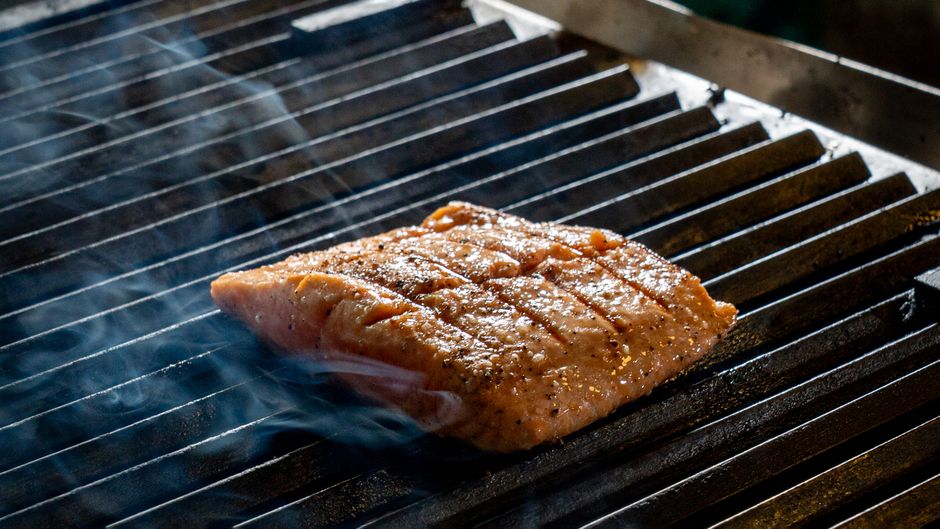
Cedar plank salmon is a backyard grilling approach that pairs a simple preparation method with a distinct aromatic character. The plank serves as both a cooking surface and a flavor element, and it allows salmon fillets to cook gently over indirect heat without falling apart on the grill grates. For weeknight cooking, the process is straightforward: soak the plank, prepare a maple glaze, set up a two-zone fire, and monitor the fillets with a timer and an instant-read thermometer.
This guide focuses on the process rather than on fixed outcomes. Grill performance, plank thickness, fillet size, ambient temperature, and wind all influence how quickly salmon cooks, so the timing cues below should be treated as starting points for observation rather than guarantees. The goal is to describe a repeatable method that home cooks can adapt to their own equipment and preferences.
Nothing here replaces personal judgment or the guidance of food safety resources. Instead, the article outlines a clear workflow, explains why each step matters, and offers markers that help cooks decide when to check the fish.
Selecting and Preparing the Cedar Plank
Cedar planks are typically sold in grilling sections of grocery and hardware stores, usually in packages of two to four. Untreated western red cedar is the common choice because it is food-safe and produces a mild, resinous aroma when heated. Avoid lumber scraps unless the wood is explicitly labeled untreated and food-safe, since construction-grade cedar may carry oils or treatments that are not intended for cooking contact. Thickness matters as well: planks around three-eighths to one-half inch thick tend to hold up better than very thin shingles, which can char quickly over a hot fire.
Soaking is the step most often rushed on busy evenings. A dry plank placed over a fire can ignite, curl, or smolder excessively, so a thorough soak adds a margin of safety and helps the wood release moisture gradually. Many cooks soak planks for at least one hour, and longer soaks of two to four hours are common when time allows. A clean baking sheet, a large roasting pan, or a cooler filled with water can hold the plank submerged; placing a heavy object on top keeps it from floating. Some cooks add salt, apple juice, or wine to the soaking water, though the practical effect on flavor is limited because the plank itself is not eaten.
Before grilling, pat the plank dry on the surface while leaving it saturated inside. A lightly oiled cooking side can reduce sticking. It is also worth keeping a spray bottle of water nearby, since edges may catch flame during cooking and a quick mist can settle them without disrupting the fish.
Building the Maple Glaze
A maple glaze for salmon usually combines a sweet element with an acidic counterpoint and a touch of salt. A workable base is pure maple syrup, a small amount of Dijon or whole-grain mustard, a splash of vinegar or citrus juice, and a pinch of salt. Some versions include minced garlic, grated ginger, or a dash of soy sauce for depth. The proportions can be adjusted to taste, but a ratio of roughly three parts syrup to one part mustard and one part acid tends to produce a glaze that brushes on without running off immediately.
Because maple syrup contains sugar, it browns quickly over direct heat. Applying the glaze in layers rather than all at once helps manage this. A common approach is to brush a thin coat on the fillets before they go onto the plank and reserve the remainder for one or two additional coats during the final minutes of cooking. If the glaze thickens too much at room temperature, a brief warm-up in a small saucepan or microwave brings it back to a brushable consistency.
The glaze can be made a day ahead and refrigerated, which shortens the weeknight timeline considerably. Preparing it while the plank soaks is an efficient way to use the waiting period.
Setting Up the Grill for Indirect Heat
Cedar plank salmon works best over indirect or moderate heat rather than a roaring direct fire. On a gas grill, this typically means lighting one side of the burners and placing the plank on the unlit side, or using a low to medium setting across the cooking area with the lid closed. On a charcoal grill, coals are banked to one side and the plank sits opposite them. A target grate temperature in the range of 350 to 400 degrees Fahrenheit is a practical starting point, though the plank itself insulates the fish from the hottest part of the environment.
Preheating the grill with the lid closed for ten to fifteen minutes helps stabilize the temperature before the plank goes on. Some cooks pre-soak and then pre-warm the plank briefly on the cooler side of the grill, which can reduce the initial smoldering that occurs when wet wood meets heat. Placing the plank directly over the heat source is generally avoided because the underside can char before the salmon is cooked through.
Ventilation and placement matter for safety and for a pleasant result. Grills should be operated outdoors in a well-ventilated area, away from siding, deck railings, and low branches. Once the plank begins to smoke, that smoke is part of the intended effect, but a plank that is actively flaming should be moved to the cooler zone or misted with water.
Grilling the Salmon and Reading Doneness
Place the salmon fillets skin-side down on the soaked plank, leaving space between them so heat and smoke can circulate. Close the lid and begin timing. As a general reference, fillets about one inch thick often take somewhere between twelve and twenty minutes on a moderate grill, but this range varies widely with equipment and conditions. The more reliable indicators are visual and tactile: the flesh lightens in color from the bottom up, the surface loses its raw sheen, and the fish releases a clear or nearly clear liquid.
An instant-read thermometer provides the clearest internal reference. For a medium result, many cooks aim for an internal temperature around 125 to 130 degrees Fahrenheit in the thickest part; for a more well-done result, 140 to 145 degrees Fahrenheit is a common range. Because fish continues to carryover-cook after leaving the grill, pulling fillets slightly below the target and letting them rest for a few minutes on the plank or a warm plate is a practical technique. Resting also allows the juices to redistribute.
Because these numbers describe doneness preferences rather than guarantees, it helps to check early the first time a new setup is used. Opening the lid briefly to take a reading does not ruin the fish, and the information gained makes future weeknight batches more predictable. Any food safety guidance from a reliable source should take precedence over personal preference, particularly for households with young children, older adults, or anyone with a compromised immune system.
Plank Handling, Serving, and Cleanup
After the fillets come off, the plank will be darkened, possibly charred at the edges, and saturated with juices and glaze. Reusing a plank is possible in some cases, but many cooks treat it as a single-use item for food safety and structural reasons. A plank that has cracked, flared, or burned through should be discarded rather than reused. If the goal is to serve directly from the plank, allow it to cool slightly and place it on a heat-safe surface, since a hot plank can damage a countertop or table.
Serving is flexible. The fillets can be lifted off with a thin spatula, or the skin can be left behind on the plank if it sticks. Simple accompaniments such as roasted vegetables, rice, a green salad, or grilled bread keep the meal weeknight-friendly. Leftovers, if any, should be refrigerated promptly and reheated gently, since salmon can dry out quickly on a second pass through heat.
From a workflow perspective, the cedar plank method fits neatly into a busy evening: soak while doing other tasks, mix the glaze in a few minutes, preheat the grill, and then cook largely unattended with periodic checks. Equipment such as a reliable instant-read thermometer and a small spray bottle makes the process more controllable. Cooks who prefer a tidy setup may find that organizing tools and ingredients before lighting the grill, including a heat-safe landing spot for the finished plank, reduces last-minute scrambling. With attention to the plank, the heat zone, and the internal temperature, cedar plank salmon can become a repeatable part of a weeknight grilling routine.