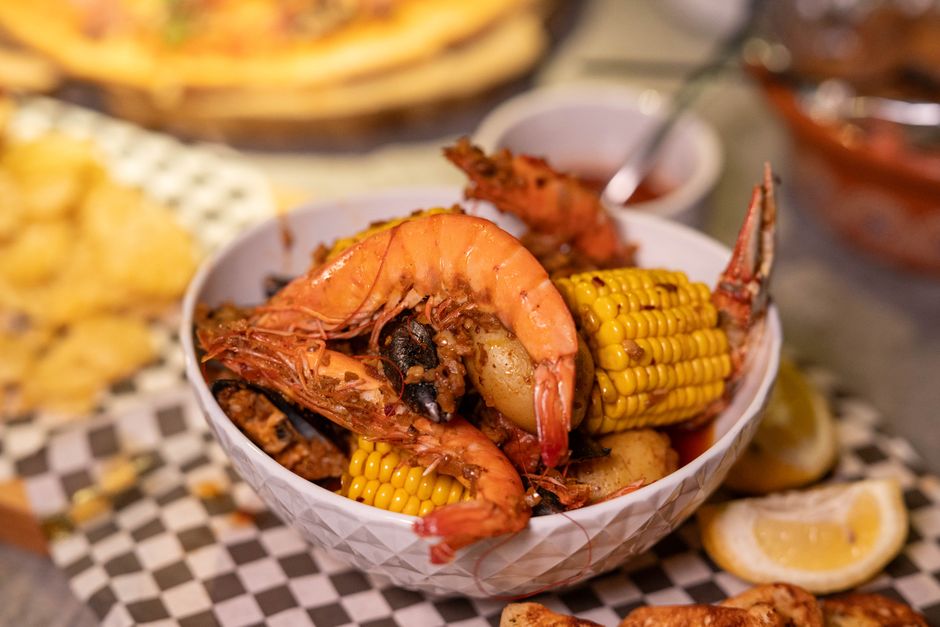
A Low Country shrimp boil is a layered cooking method associated with the coastal Carolinas, where shrimp, corn, sausage, and potatoes are cooked in a single well-seasoned pot. The approach relies less on precision equipment and more on understanding how each ingredient responds to heat, salt, and time. Because the components cook at different rates, the sequence in which they enter the pot and the duration they spend in the liquid both matter considerably. This guide examines pot sizing, layering order, seasoning strategy, and resting time as a set of connected decisions rather than isolated steps.
Unlike many recipes that treat timing as a fixed schedule, a shrimp boil is often adjusted on the day of cooking. Pot dimensions, burner output, ingredient size, and even outdoor temperature can shift how quickly water returns to a boil. Recognizing these variables helps cooks make informed adjustments instead of following a rigid script. The method described here is framed around observation and sequencing, with the understanding that results depend on the specific ingredients and setup being used.
The information below is presented for general context and educational purposes. It describes a commonly practiced coastal approach and the reasoning behind it, without prescribing a single correct outcome. Individual preferences, dietary considerations, and local conventions vary, and cooks should apply their own judgment when adapting any method to their circumstances.
Choosing Pot Size and Understanding the Ratio
Pot size is one of the most consequential decisions in a shrimp boil, because it affects both the seasoning concentration and the physical layering of ingredients. A pot that is too small crowds the contents, preventing even heat circulation and making it difficult to remove components at the right moment. A pot that is too large for the quantity of food dilutes the seasoned water and can leave the finished dish tasting flat. As a general rule, the pot should allow the ingredients to move slightly while still being mostly submerged in the cooking liquid.
For a boil serving roughly four to six people, a twelve- to sixteen-quart stockpot is commonly referenced, while larger gatherings often call for twenty quarts or more. These figures are starting points rather than fixed requirements, since the volume of corn and sausage can vary significantly. Cooks often measure by volume instead: the total of ingredients should occupy no more than about two-thirds of the pot, leaving headroom for the water to boil vigorously without spilling over. This margin also makes it easier to stir and to lift items out with tongs or a basket.
The seasoning ratio is closely tied to water volume. Old Bay and similar seafood seasonings are typically added in proportion to the liquid rather than to the food, which is why pot dimensions and fill level directly influence flavor intensity. A common reference point is around one-quarter cup of seasoning per gallon of water, adjusted to taste and to the salt content of the sausage. Because sausage releases salt and fat into the water, cooks sometimes reduce the initial seasoning and add more near the end, a technique that allows for more control over the final profile.
- Match pot capacity to the number of servings, keeping ingredients to roughly two-thirds of the volume.
- Measure water first, then season in proportion to gallons rather than to ingredient weights.
- Account for salted or smoked sausage when setting the initial seasoning level.
- Keep a reserve of seasoning to adjust the liquid after tasting.
Layering Order and Ingredient Timing
Layering order follows the principle that dense, slow-cooking items go in first and delicate items go in last. Potatoes, typically small red or Yukon varieties, require the longest time in the water and are usually added immediately after the seasoned water reaches a boil. Whole or halved onions and halved heads of garlic often accompany them, contributing aromatic depth while withstanding prolonged heat. The potatoes should be partially tender before the next layer is introduced, a state that can be checked with a knife tip.
Corn on the cob and smoked sausage generally form the second layer. Corn is often added as halved or quartered cobs, depending on size, and sausage is cut into two- to three-inch lengths. These ingredients need less time than potatoes but more than shrimp, so they occupy the middle of the sequence. Some cooks add sausage earlier to allow its fat and seasoning to integrate into the broth, while others add it with the corn to preserve a firmer texture. Both approaches are documented in coastal kitchens, and the choice depends on whether the cook prefers the sausage to act as a flavor base or as a distinct component.
Shrimp enter last because they cook very quickly and can become rubbery if left in the liquid too long. Most guidance suggests adding shrimp once the potatoes are tender and the corn is nearly done, then cooking only until the shrimp turn opaque and curl. The exact moment varies with shrimp size, water temperature recovery, and how many shrimp are added at once. Using a large volume of shrimp at a lower starting temperature extends the cooking window slightly, which can be useful for timing but requires closer attention.
Seasoning is often layered alongside the ingredients rather than added only at the start. Additional Old Bay can be sprinkled between layers, and some cooks add a final dusting after the pot is drained. This incremental approach allows the seasoning to reach the surface of the corn and sausage rather than remaining entirely in the water. The technique is flexible and can be adjusted to the saltiness of the sausage and the preferences of the people being served.
Resting Time and Serving Considerations
Resting time is a frequently discussed element of the shrimp boil method, and it serves two practical purposes. First, it allows the ingredients to cool slightly so they can be handled comfortably when transferred to a serving vessel or spread on a lined table. Second, it gives the seasoned liquid a final opportunity to be absorbed by the corn, potatoes, and sausage. A resting period of roughly five to ten minutes after draining is commonly referenced, though the appropriate duration depends on how the boil will be served and how hot the ingredients remain.
Some cooks drain the pot entirely and let the contents steam in a covered vessel, while others remove the ingredients with a basket and leave them in a light coating of seasoned liquid. Each approach influences texture and flavor distribution differently. Draining fully tends to produce a cleaner, less salty result, whereas retaining some liquid keeps the seasoning more pronounced. Neither method is inherently superior; the choice reflects how the dish will be presented and how intense the seasoning was during cooking.
A shrimp boil is a sequence of decisions about heat, salt, and time, and the most reliable results come from observing the ingredients rather than watching the clock alone.
Serving logistics also connect to resting time. If the boil will be spread on newspaper or a large tray, a slightly longer rest helps prevent excess liquid from pooling. If it will be served directly from the pot, a shorter rest may be preferable. Galley Go notes that outdoor cooking setups often benefit from planning the transfer step in advance, so that the resting period does not become an unplanned delay while guests wait. The overarching point is that resting is not a passive gap but a planned stage that influences both safety and presentation.
Adapting the Method to Different Contexts
Coastal Carolina boils vary widely by household, and the method described here represents a general framework rather than a regional standard. Some cooks add beer or vinegar to the water, others include lemons or additional spice blends, and many adjust the layering based on the size and type of ingredients available. These variations are part of the tradition and reflect local preferences, seasonal availability, and the practical constraints of outdoor cooking. Understanding the underlying logic of layering and ratio makes it easier to adapt the process without losing coherence.
Weather and equipment are two external factors that frequently affect the process. Wind can slow the recovery of a boil on an outdoor burner, and ambient temperature can influence how quickly ingredients cool during resting. Similarly, pot material affects heat distribution, with heavy-bottomed pots generally providing more even cooking than thin-walled ones. Cooks often account for these variables by allowing extra time and by checking doneness rather than relying solely on a timer.
Food safety considerations also deserve attention. Shrimp should reach a safe internal temperature, and cooked ingredients should not remain in a warm environment for extended periods. Chilling leftovers promptly and separating them from the seasoned liquid are common practices. These steps are not unique to shrimp boils but apply to any large-batch cooking method where multiple ingredients are handled at once.
In summary, a Low Country shrimp boil is best understood as a process of sequencing and observation. Pot size, seasoning ratios, layering order, and resting time are interconnected decisions, and each one informs the others. Approaching the method with attention to detail and a willingness to adjust based on conditions tends to produce more consistent and satisfying results than strict adherence to a single fixed schedule.